Executive view
- Event status: We could not corroborate, via primary sources, specific details about a “Microsoft 365 Copilot Prompt‑a‑thon for Government” in Ft. Lauderdale. Treat any event logistics as tentative until confirmed directly by Microsoft’s public sector channels or official registration pages 1 2.
- Mission relevance: Regardless of venue, federal teams can prepare now by aligning Microsoft 365 Copilot deployment with existing security controls, compliance obligations, and AI governance requirements, and by establishing prompt‑engineering practices that are rooted in agency data policy 3 4 5.
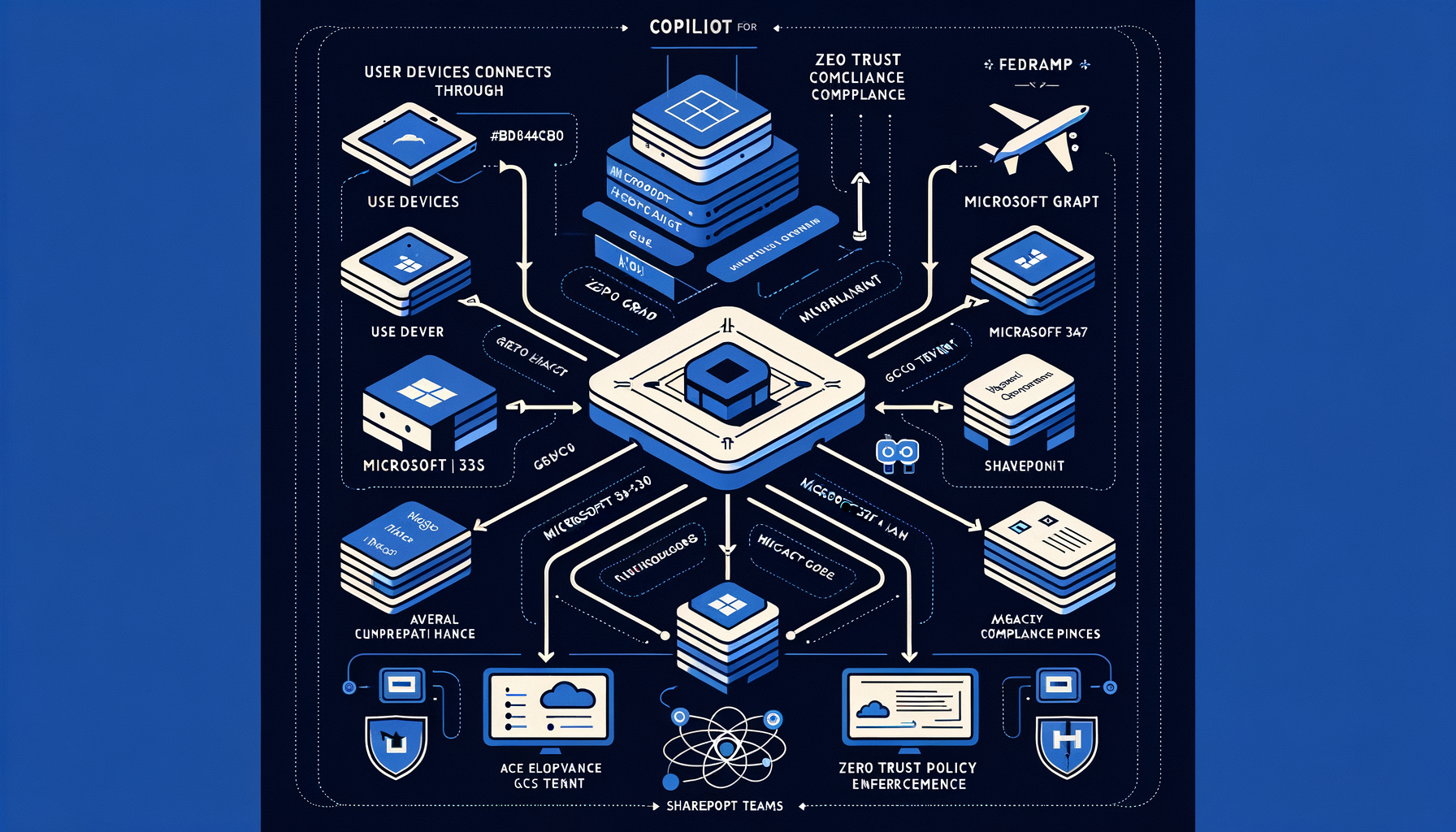
What Microsoft 365 Copilot is — and how it behaves with federal data
- Core capability: Microsoft 365 Copilot is an add‑on experience integrated into Microsoft 365 applications that uses large language models with your Microsoft Graph context to assist in drafting, summarization, analysis, and automation. It is governed by your tenant’s data access controls and enterprise policies 1 3.
- Data protection: Microsoft states Copilot for Microsoft 365 does not use your organization’s content to train foundation models and adheres to Microsoft’s enterprise compliance and privacy commitments within the Microsoft 365 boundary 3.
- Policy alignment: Copilot honors existing Microsoft 365 security and compliance controls — for example, data access is constrained by permissions in Microsoft Graph, and outputs are subject to the same audit, compliance, and information governance baselines your organization enforces in Microsoft 365 3.
Availability considerations for US Government clouds
- Verify cloud support: Agencies operating in GCC, GCC High, or DoD environments should consult both the Copilot service description and the Microsoft 365 US Government service description to confirm current support and any feature variations for sovereign clouds before planning deployments or training events 1 2.
- Alternative for experimentation: Copilot with commercial data protection provides chat experiences where user prompts and responses are not retained by Microsoft and are not used to train foundation models; it is designed for enterprise scenarios with commercial data protections. Agencies must verify whether this experience is available and permitted for use in government cloud tenants and note Microsoft’s stated availability limitations for sovereign clouds when planning pilots 6.
Compliance posture and cloud boundary
- Azure Government boundary: For agency‑developed AI patterns and mission copilots, Azure Government provides a FedRAMP High-authorized environment and alignment with DoD SRG impact levels (IL2, IL4, IL5), supporting workloads that require these compliance baselines 7.
- Generative AI in Azure Government: Microsoft has announced Azure OpenAI Service availability in Azure Government, enabling agencies to build generative AI capabilities within the government cloud boundary and in alignment with Azure Government compliance programs 8 7.
- Policy frameworks: Agency deployments should be governed under OMB M‑24‑10 (AI inventories, risk management, safeguard requirements for safety/security, privacy, and civil rights) and the NIST AI RMF 1.0 (map, measure, manage risks across the AI lifecycle) 4 5.
What federal teams can do now
Confirm tenant eligibility and controls
- Validate your tenant’s current availability for Microsoft 365 Copilot features via the official service descriptions, and confirm whether any sovereign cloud limitations apply to your environment 1 2.
- Document how Copilot’s access model will be constrained by Microsoft 365 permissions, sensitivity labels, and data governance baselines already in place — and test against high‑value data repositories to affirm expected behavior 3.
Establish AI governance baseline
- Create or update AI use policies to meet OMB M‑24‑10 requirements (use case inventory, risk assessments, safeguards) and align with NIST AI RMF functions for ongoing measurement and monitoring 4 5.
- Define acceptable prompt patterns and red‑team prompts that test data leakage risks, role‑based access observance, and policy guardrails; capture findings in your AI risk register 4 5.
Prepare for prompt‑engineering sprints
- Focus scenarios where Copilot’s value is highest and permissions are clear: document drafting and review, meeting summarization, first‑pass data analysis on SharePoint/OneDrive content, and task automation inside Teams/Outlook — ensuring all content sources are governed by your existing policies 3.
- Curate prompt libraries with agency‑approved context blocks (mission terms, data dictionaries, sensitivity cues) and embed reminders that outputs are subject to records management and information governance, consistent with Microsoft 365 policy enforcement 3.
Technical validation checklist
- Access control: Verify least‑privilege access to repositories referenced by Copilot (SharePoint sites, Teams channels, OneDrive folders), and confirm external sharing configurations align with AI usage policies 3.
- Information protection: Confirm sensitivity labeling and data loss prevention coverage across content that may be surfaced in Copilot interactions; test that Copilot cannot exceed user permissions when drafting or summarizing 3.
- Auditability: Ensure that operational logging and audit mechanisms in Microsoft 365 are enabled and monitored so Copilot activity can be reviewed consistent with agency oversight requirements 3.
- Tenant boundaries: For any AI work outside sovereign clouds, document the boundary implications, availability constraints, and governance approvals required — particularly if evaluating Copilot with commercial data protection for limited experimentation 6 2.
Microsoft platform context for federal deployments
- Microsoft 365 and Copilot governance: Agencies can leverage existing Microsoft 365 compliance tooling — identity and access controls, information protection, records and audit — because Copilot honors these tenant policies and does not expand data access beyond a user’s existing permissions 3.
- Azure Government and generative AI: For mission systems requiring FedRAMP High or DoD SRG IL4/IL5, Azure Government plus Azure OpenAI Service provides a path to agency‑specific copilots and AI workflows inside the government cloud perimeter 7 8.
- Acquisition alignment: Use OMB M‑24‑10’s safeguards and NIST AI RMF evaluation guidance as source‑of‑truth for requirements in market research, RFIs, and contracts; tie vendor claims (including Copilot features) back to these policy baselines and to Microsoft’s published service descriptions rather than marketing materials 4 1 3.
Event note and action guidance
- Because we cannot validate a Ft. Lauderdale Prompt‑a‑thon for Government from primary sources, agencies should proceed by preparing internally for any Copilot‑focused workshops using the validated steps above and by confirming event authenticity and scope via official Microsoft channels before committing resources 1 2.
- If an event is confirmed, prioritize hands‑on scenarios that operate entirely within your tenant’s governed content, and use the session to capture residual risks, control gaps, and training needs that feed into your OMB M‑24‑10 AI inventory and safeguard implementation plans 4.
1: Microsoft 365 Copilot service description — https://learn.microsoft.com/en-us/office365/servicedescriptions/microsoft-365-copilot-service-description/microsoft-365-copilot 3: Security, privacy, and compliance for Microsoft Copilot for Microsoft 365 — https://learn.microsoft.com/en-us/microsoft-365/copilot/microsoft-365-copilot-privacy 6: Copilot with commercial data protection overview — https://learn.microsoft.com/en-us/copilot/commercial-data-protection 2: Microsoft 365 US Government service description — https://learn.microsoft.com/en-us/office365/servicedescriptions/microsoft-365-government/microsoft-365-us-government 7: Azure Government compliance offerings — https://learn.microsoft.com/en-us/azure/azure-government/documentation-compliance 8: Azure OpenAI Service now available in Azure Government — https://azure.microsoft.com/en-us/blog/azure-openai-service-now-available-in-azure-government/ 4: OMB M-24-10: Advancing Governance, Innovation, and Risk Management for Agency Use of Artificial Intelligence — https://www.whitehouse.gov/wp-content/uploads/2024/03/M-24-10.pdf 5: NIST AI Risk Management Framework 1.0 — https://nvlpubs.nist.gov/nistpubs/SpecialPublications/NIST.SP.1270.pdf
References
- Microsoft 365 Copilot service description — https://learn.microsoft.com/en-us/office365/servicedescriptions/microsoft-365-copilot-service-description/microsoft-365-copilot ↩
- Microsoft 365 US Government service description — https://learn.microsoft.com/en-us/office365/servicedescriptions/microsoft-365-government/microsoft-365-us-government ↩
- Security, privacy, and compliance for Microsoft Copilot for Microsoft 365 — https://learn.microsoft.com/en-us/microsoft-365/copilot/microsoft-365-copilot-privacy ↩
- OMB M-24-10: Advancing Governance, Innovation, and Risk Management for Agency Use of Artificial Intelligence — https://www.whitehouse.gov/wp-content/uploads/2024/03/M-24-10.pdf ↩
- NIST AI Risk Management Framework 1.0 — https://nvlpubs.nist.gov/nistpubs/SpecialPublications/NIST.SP.1270.pdf ↩
- Copilot with commercial data protection overview — https://learn.microsoft.com/en-us/copilot/commercial-data-protection ↩
- Azure Government compliance offerings — https://learn.microsoft.com/en-us/azure/azure-government/documentation-compliance ↩
- Azure OpenAI Service now available in Azure Government — https://azure.microsoft.com/en-us/blog/azure-openai-service-now-available-in-azure-government/ ↩