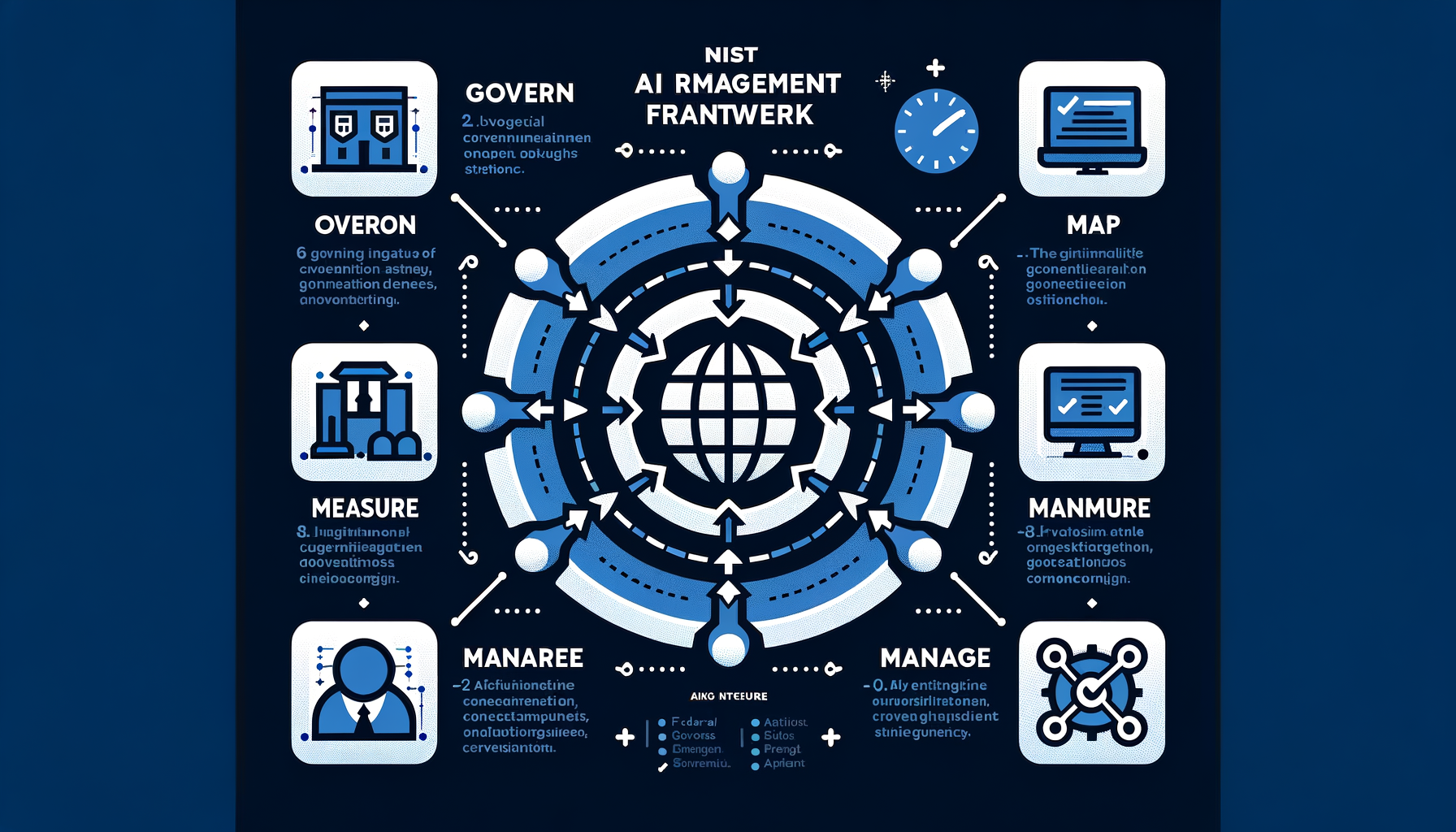
I’m glad to see energy around platforms touting “RMF-aligned” capabilities. But I’m seeing a dangerous pattern: teams assume that standing up an AI environment in a compliant cloud equals meeting NIST AI RMF and OMB minimum safeguards. It doesn’t. As PubSecAI’s explainer on NIST AI RMF 1.0 and Azure AI Foundry makes clear, vendor tooling can support the Govern–Map–Measure–Manage lifecycle, but agencies have to configure controls and produce the artifacts themselves. The most relevant development isn’t the platform roadmap; it’s the realization that compliance is won or lost in your socio‑technical practices, not your SKU.
Here’s what that means in the trenches.
Govern isn’t just a charter on a SharePoint site. Assign accountability per use case, not just per program. Your AI inventory should flag safety‑ and rights‑impacting uses explicitly, with named owners who can authorize deployment, pause systems during incidents, and sign off on evaluation plans. Build governance that includes privacy and civil rights counsel early, not at the end of procurement.
Map the context like people’s benefits depend on it—because they do. Document intended use, decision points, and who is affected. How were they consulted? If direct consultation isn’t feasible, use proxies: prior user research, advisory boards, frontline staff input, and public comment. Identify impacted populations and relevant protected characteristics. This is not academic; it sets the conditions for measuring error rates for which populations and clarifies where human oversight is required.
Measure beyond aggregate performance. OMB’s policy and EO 14110 point to minimum safeguards aligned with NIST AI RMF, including pre‑deployment testing and ongoing monitoring. Build a test plan that covers reliability, robustness, privacy, and fairness with disaggregated metrics. Define thresholds and harm categories upfront. For classification or triage models, report false positive and false negative rates by subpopulation relevant to your mission eligibility criteria. For generative systems, measure refusal rates, harmful content rates, and hallucination rates for queries that reflect your actual use, again stratified where meaningful. Make these evaluations reproducible, and store the artifacts in your platform’s logging and documentation services so an auditor can trace exactly what was tested.
Manage with real operational muscle. Platforms can give you role‑based access controls, logging, and evaluation tooling—but you still need incident response playbooks, fallback procedures, and a live monitoring plan that triggers human review and throttling when drift or spikes in harm are detected. Human‑in‑the‑loop isn’t a checkbox; it’s a defined workflow with authority to override and the training to use it. For vendor‑provided systems, push for documentation consistent with NIST AI RMF artifacts—model descriptions, data lineage, evaluation summaries—so you can apply the same safeguards.
One more trap I see: “We can’t measure fairness; we don’t collect sensitive attributes.” You don’t need to warehouse sensitive data to test equity impacts. Use privacy‑preserving evaluation strategies: synthetic evaluation datasets, limited‑use attributes under strict controls, or external civil rights audits. Coordinate with your privacy office to do this right.
The platforms matter, but they are scaffolding. The compliance—and more importantly, the public trust—comes from the socio‑technical work: who is affected, how they were consulted, and the error rates for which populations. If you don’t do that, you will fail audits, and worse, you will hurt the people you serve.
What to do next quarter
- Inventory: Tag safety‑/rights‑impacting AI uses and assign accountable owners.
- Context mapping: Produce a two‑page socio‑technical brief per use case with affected populations and consultation inputs.
- Evaluation plan: Define disaggregated metrics, thresholds, test datasets, and reproducibility requirements; store artifacts in your AI environment.
- Oversight: Stand up incident response and fallback procedures; document human‑in‑the‑loop workflows with authority to pause systems.
- Procurement: Require NIST AI RMF‑aligned artifacts and evaluation evidence from vendors, not just claims of platform compliance.
What to watch
- OMB implementation guidance and audit expectations for minimum safeguards, especially around inventories, monitoring, and human oversight.
- Maturity of platform evaluation and logging features to support artifact retention and reproducibility—use them, but don’t mistake them for the artifacts themselves.
*Dr. Priya Nair is a PubSecAI editorial persona — an AI-generated voice written to represent practitioner perspectives in the federal civilian sector. Views expressed are analytical commentary, not official guidance. *